
Behind the Locked Doors
By Kasey Lewis, VCU Social Work Intern
On paper, juvenile detention facilities are supposed to provide more than custody. Students with disabilities are still entitled to educational services, Individualized Education Program (IEP) implementation, recreation, and developmental support while in custody. But what I observed and heard from residents raised serious questions about what those protections look like in practice.
When most people think about juvenile justice, they think about crime, punishment, and maybe rehabilitation. What they do not often think about is disability. Before visiting and speaking with residents at Bon Air Juvenile Correctional Center and W.W. Moore Juvenile Detention Home, I was not thinking much about IEPs, missed instructional time, trauma, sensory overload, or mental health needs inside these facilities either. But after those visits, I left thinking about something very different: what happens when children who need support are instead met with control, isolation, and instability inside the very systems responsible for their care.
Although I am writing broadly about Virginia’s juvenile justice system because these concerns extend beyond any one facility, these issues became real to me through those experiences.
When Control Replaces Care
During my internship at dLCV, one thing I kept coming back to was language. In schools, people talk about “de-escalation,” “behavior management,” or “classroom interventions.” In juvenile detention settings, however, the language shifts. Children experience “room confinement,” “behavioral confinement,” “disciplinary isolation,” and “stimulus reduction” in place of support, engagement, and care.
On paper, these terms may sound clinical or acceptable. But after speaking with residents, I began wondering whether this language sometimes disguises practices that function less as support and more as institutional control.
That distinction matters especially for children with disabilities.
For young people with developmental disabilities, trauma histories, mental health conditions, sensory needs, brain injuries, or educational support plans, restriction is not neutral. Lost instructional time is not neutral. Isolation is not neutral.
What may appear to be “behavior management” can quickly become the removal of the very supports these children rely on most: consistent education, emotional regulation, structure, movement, and human connection. Instead of receiving disability-responsive care, children are too often managed through restriction and separation.
At some point, we have to ask whether these systems are truly centered on rehabilitation—or whether they have become more focused on containment.
Isolation Presented as Instruction
On the surface, the facility appeared orderly but sterile. Like many institutions, it presented itself through structure and professionalism. But private conversations complicated that picture.
The children we spoke with described long periods of isolation, missed instructional time, limited recreation, inconsistent mental health support, and days with very little meaningful engagement.
One student’s experience in particular has stayed with me. Imagine being told you are watching a movie in class, except you are watching it through the small window of a heavy metal cell door from across the room. The sound echoes through an otherwise empty classroom, making it difficult to make sense of what the film is about and eventually, you are expected to discuss what you have learned.
That is not meaningful education. It is isolation and supervision presented as instruction.
For children with disabilities, experiences like these can be especially harmful. Students who already struggle with concentration, emotional regulation, sensory processing, communication, or trauma are placed into environments that often intensify those very challenges. Instead of receiving responsive educational support, many are managed through restriction and institutional control.
The Harm That Often Goes Unseen
Too often, public attention only turns toward juvenile detention after a disturbing allegation or major public incident. But some of the most serious harms inside these institutions are not always the most visible ones.
Sometimes the quieter harms continue in the background:
- missed educational instruction,
- prolonged inactivity,
- inconsistent mental health support,
- Isolation,
- and environments that prioritize control over development.
The records we reviewed suggested a significant decline in instructional time following institutional disruption and staff turnover. By the time of our visit, residents appeared to be receiving far less educational instruction than Virginia’s standards require.
For children with disabilities, these conditions do not simply create disciplinary concerns. They interfere directly with educational access, emotional regulation, developmental stability, and the consistent support these children are entitled to receive.
These are not abstract concerns. Children described these experiences in real time.
Behind the Locked Doors
That is why I keep coming back to the title: Behind the Locked Doors.
If we are serious about disability rights, education, and dignity, then we have to be willing to look beyond the most polished version of these institutions and ask difficult questions about what daily life actually looks like for children in custody—especially children with disabilities.
Because what happens behind those locked doors matters.
It matters when education becomes inconsistent. It matters when isolation replaces engagement. And it matters when children with disabilities are managed primarily through restriction and institutional control rather than support, development, and meaningful care.
When I leave my placement with dLCV, these questions will stay with me:
- What happens to a child when meaningful support is replaced with isolation?
- What does it mean for a young person with a disability to spend long stretches of time without adequate education, engagement, or care?
- And at what point do we stop accepting institutional language that softens these realities and start confronting the harm more honestly?
- Because there are children behind those locked doors who already know the answers.
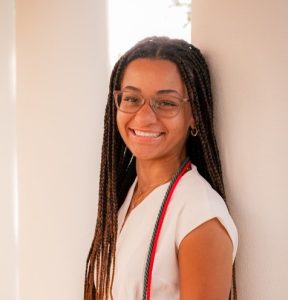
Kasey Lewis is a Master of Social Work student at Virginia Commonwealth University with academic and professional interests in disability rights, juvenile justice, homelessness, and public policy. Kasey currently interns with the disAbility Law Center of Virginia, with research and practice interests centering on equity, systems change, and community-informed approaches to social work and policy.
“
“dLCV is a 501(c)3 nonprofit that provides information and referral, legal representation, technical assistance, short-term assistance, systemic advocacy, monitoring and training to Virginians with disabilities. Our services are provided free of charge. We are independent from state and local government.
The statements given by staff or volunteers for our blog content are NOT intended to be taken as legal advice. Instead, our blog content aims to focus on the lived experiences of people with disabilities and shine a light on the diverse perspectives within Virginia’s vibrant disability community.”
— dLCV Blog Content Statement